Virtual assistant salaries in the U.S. range from $15.58 to $42.24 per hour depending on specialization and region, with a national average of about $25.66 per hour. Annual compensation typically falls between $43,000 and $53,000 for full-time U.S.-based roles. That spread is wide enough to make budgeting feel like guesswork if you don’t know what’s driving the numbers. This guide breaks down every major factor affecting virtual assistant pay rates so you can hire with confidence and plan your budget accurately.
What factors primarily influence virtual assistant salaries?
Geography is the single biggest driver of VA compensation costs. A virtual assistant working in San Francisco or New York commands significantly higher pay than one based in rural Tennessee, simply because local cost of living sets the floor for competitive wages. Remote work has softened this gap somewhat, but regional pay norms still shape expectations on both sides of the hiring table.
Specialization is the second major driver, and it moves the needle fast. Specialized skills like bookkeeping or CRM management increase VA hourly rates by 20–50% above regional medians. A general admin VA handling email and scheduling sits at the lower end of the pay scale. A VA managing your HubSpot pipeline or reconciling QuickBooks accounts sits at the top.

Experience and seniority follow a predictable curve. Entry-level VAs with one to two years of experience typically earn near the bottom of the hourly range for their region. Senior VAs with five or more years, especially those who have supported C-suite executives, command rates closer to the top of the range and often negotiate retainer agreements rather than hourly billing.
The hiring channel you choose also affects what you pay, sometimes dramatically.
- Freelance platforms connect you directly with VAs, giving you the most flexibility and the lowest base rates.
- VA agencies add a 20–60% markup over freelance rates to cover recruiting, vetting, management, and backup coverage.
- Direct referrals often land in the middle, with lower overhead than agencies but more vetting work on your end.
- Nearshore staffing partners like Nir-yu sit in a distinct category, offering vetted talent with transparent pricing and no hidden bench costs.
Pro Tip: Before posting a job, write a detailed task list for the role. Knowing whether you need a generalist or a specialist saves you from overpaying for skills you won’t use or underpaying for skills you actually need.
How do different engagement models affect overall VA compensation costs?
The engagement model you choose shapes your total spend as much as the hourly rate itself. Four models dominate the market, and each fits a different business situation.
| Model | Typical Cost Range | Best For | Key Drawback |
|---|---|---|---|
| Hourly | $15–$65/hr (U.S.) | Variable, unpredictable workloads | Costs fluctuate; harder to budget |
| Retainer | 5–10% below hourly rate | Consistent, recurring task volume | Unused hours are often lost |
| Project-based | Fixed fee per deliverable | One-time or defined-scope work | Scope creep can inflate costs |
| Full-time salary | $43,000–$53,000/yr (U.S.) | Long-term, high-volume roles | Highest commitment and overhead |
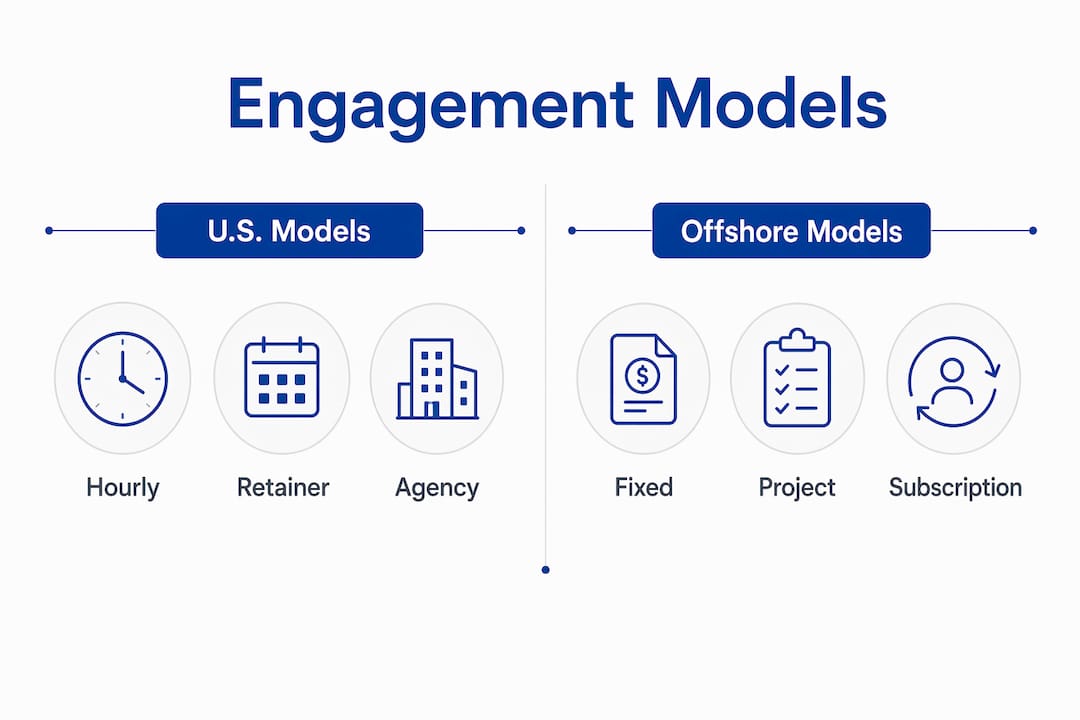
Retainer agreements often offer a 5–10% discount compared to straight hourly billing. That discount rewards you for volume and gives the VA income predictability, which tends to improve reliability and responsiveness.
Hidden costs catch most small business owners off guard. Software licenses alone can add $45–$335 monthly per VA when you factor in tools like Salesforce, Asana, and Slack. That’s before you account for onboarding time, overtime premiums, or agency management fees. A $20-per-hour VA with $200 in monthly software costs and a 30% agency markup is actually costing you closer to $30 per hour in real terms.
Pro Tip: When comparing VA quotes, always ask for a fully loaded cost estimate that includes software, onboarding, and any agency fees. The base rate is rarely the full story.
What are realistic salary expectations for U.S. vs. offshore VAs?
The gap between U.S.-based and offshore VA rates is substantial, and understanding it is the core of any serious VA compensation guide.
U.S.-based VA pay ranges
U.S.-based VAs earn $20–$65 per hour depending on specialization. Monthly costs for U.S. VAs run from $390 to $6,500 depending on hours worked and service level. Executive-level VAs supporting founders or C-suite teams sit at the top of that range. General admin support sits at the bottom.
Offshore VA pay ranges
Filipino VAs handling general tasks typically run $5–$20 per hour. Latin American VAs price in between U.S. and Philippine rates, offering a middle ground that many U.S. startups find attractive. Monthly offshore VA costs through agencies run $800–$3,000, compared to the broader U.S. range above.
The trade-offs are real and worth naming directly.
- Time zone alignment: Latin American VAs work in U.S.-compatible time zones, which eliminates the async delays common with Philippine or Eastern European hires.
- Communication quality: English proficiency varies widely offshore. Latin America generally delivers stronger written and spoken English than many other offshore regions.
- Cultural fit: Nearshore talent from countries like Mexico, Costa Rica, and Argentina tends to align more closely with U.S. business norms than far-offshore alternatives.
- Management overhead: Direct offshore hiring is cheaper but requires more of your time. A managed nearshore partner handles vetting, onboarding, and performance support.
Pro Tip: Don’t evaluate offshore rates in isolation. Factor in your own management time. If you spend five hours a week managing a $10-per-hour VA, your real cost is much higher than the invoice suggests.
How to budget effectively for VA hiring as a small business
Budgeting for a virtual assistant starts with a clear picture of what you actually need done. Vague job descriptions lead to mismatched hires, which waste money faster than a high hourly rate ever could.
- List every task you want to delegate. Group them by skill type: admin, technical, financial, or creative. This tells you whether you need one generalist or a specialist.
- Estimate weekly hours per task group. Be honest. Most business owners underestimate by 30–40% when they first map their workload.
- Match your task list to an engagement model. Fewer than 20 hours per week often fits an hourly or retainer model. Consistent full-time needs to justify a salary arrangement.
- Calculate fully loaded cost, not just the rate. Add software, onboarding, and any agency or partner fees to your base rate estimate.
- Build in a 15% buffer for scope growth. VA workloads almost always expand in the first 90 days as you identify new tasks to delegate.
Output efficiency matters more than hourly rate when measuring true VA value. A VA proficient in AI tools can boost output by 15–25%, which means a $30-per-hour specialist who finishes in two hours beats a $20-per-hour generalist who takes four. Pay for results, not just time.
Scaling VA hours with business growth is easier when you start with a flexible engagement model. Begin with a retainer or hourly arrangement, then move to a full-time or expanded retainer as your needs solidify. Locking into a long-term agency contract before you understand your actual workload is one of the most common and costly mistakes early-stage founders make. Understanding flexible staffing models before you commit saves you from expensive contract renegotiations later.
Key Takeaways
Virtual assistant pay rates vary so widely that the hiring channel, specialization level, and engagement model matter as much as the base hourly rate when calculating true cost.
| Point | Details |
|---|---|
| U.S. average VA rate | The national average is $25.66/hr, with a range of $15.58–$42.24 depending on role and region. |
| Specialization adds 20–50% | Skills like bookkeeping or CRM management command significant premiums above general admin rates. |
| Agency markups are real | Agencies add 20–60% over freelance rates; always calculate the fully loaded cost before comparing. |
| Hidden costs add up fast | Software licenses can add $45–$335 monthly per VA, a cost most budgets overlook entirely. |
| Offshore rates offer savings | Latin American VAs offer U.S.-compatible time zones at rates well below domestic alternatives. |
Why I think most startups are budgeting for VAs the wrong way
Most founders I talk to anchor their VA budget to a single number: the hourly rate. That’s the wrong starting point. The hourly rate is just the most visible line item. The real cost includes your time managing the VA, the software they need, the ramp-up period before they’re productive, and the replacement cost if the hire doesn’t work out.
The founders who get the most value from VA hires do two things differently. First, they pay a premium for specialization aligned to a critical function, whether that’s financial reporting, CRM management, or executive scheduling. A specialist who owns a function completely is worth far more than a generalist who handles it partially. Second, they treat the engagement model as a financial tool, not an afterthought. Starting with a retainer, reviewing output at 60 days, and then scaling hours or scope based on actual results is a far better approach than signing a 12-month agency contract on day one.
The offshore versus onshore debate is real, but the answer isn’t always “go cheap.” Latin American nearshore talent hits a sweet spot that many U.S. startups overlook. You get U.S.-compatible time zones, strong English communication, and rates that are meaningfully below domestic alternatives, without the management overhead of far-offshore hiring. That combination is why Nir-yu focuses specifically on this region. The value isn’t just in the rate. It’s in the reduced friction and the quality of output over time.
— James
Nir-yu connects U.S. small businesses with vetted Latin American VAs
Small business owners who need reliable VA support without the guesswork of direct offshore hiring have a clear option. Nir-yu sources and vets virtual assistants across Latin America, matching each candidate to your specific role requirements and company culture.

Nir-yu’s transparent cost-plus pricing means you see exactly what you’re paying and why, with no hidden markups or pre-assigned bench talent. Whether you need a general admin VA or a specialist in finance or CRM, Nir-yu builds the hire around your actual needs. Businesses that partner with Nir-yu save over 57% on talent costs compared to U.S.-based hiring. You can hire remote talent in Costa Rica or hire remote talent in Mexico and get started with a free strategy session to map your VA needs before you commit to anything.
FAQ
What is the average virtual assistant salary in the U.S.?
The national average hourly rate for a U.S.-based virtual assistant is about $25.66, with annual salaries typically falling between $43,000 and $53,000 for full-time roles.
How much do offshore virtual assistants charge compared to U.S. VAs?
Filipino VAs generally charge $5–$20 per hour for general tasks, while Latin American VAs price in between that range and U.S. rates of $20–$65 per hour, offering a cost-effective middle ground.
What engagement model is best for a small business hiring a VA?
A retainer model works best for consistent, recurring workloads because it typically offers a 5–10% discount over hourly billing and gives both parties predictable terms.
Do agency fees significantly increase VA costs?
Yes. Agencies add a 20–60% markup over freelance rates to cover recruiting, vetting, and management. That markup can turn a $25-per-hour VA into an effective cost of $30–$40 per hour.
What hidden costs should I budget for when hiring a VA?
Software licenses are the most commonly missed expense, adding $45–$335 monthly per VA. Onboarding time, overtime premiums, and agency management fees also contribute to the true total cost.